Lung Function Testing (Spirometry):
What It Measures, Who It Helps, and What to Expect
Breathing is something we rarely think about, until it doesn’t feel normal.
Maybe you’ve noticed:
getting short of breath more easily than you used to
a cough that lingers for weeks
wheezing or chest tightness
feeling “winded” on stairs or during exercise
These symptoms can be unsettling, especially when they’re intermittent or hard to explain.
At Peak Family Practice, we offer lung function testing (spirometry) to help assess how well your lungs are working and to guide the next steps in care; whether that’s reassurance, treatment, or further investigation.
What is lung function testing?
Lung function testing, most commonly called spirometry, is a simple test that measures:
how much air you can breathe out, and
how quickly you can breathe it out
These measurements help us understand whether your lungs are working normally, or whether there may be signs of airflow limitation or reduced lung capacity.
Spirometry is one of the most useful first-line tests for assessing common respiratory conditions, and it gives us objective information to work.
What symptoms can lung function testing help investigate?
Spirometry is often recommended when someone experiences:
shortness of breath
wheezing
a persistent cough
chest tightness
reduced exercise tolerance
recurrent “bronchitis” or chest infections
symptoms that worsen with cold air, exercise, dust, or allergens
It can be especially helpful when symptoms are mild but persistent, or when you want clarity about whether the issue is more likely to be lung-related or something else.
Who should consider a lung function test?
A lung function test may be useful if you:
have symptoms suggestive of asthma
have a cough or wheeze that persists for weeks and want a clearer diagnosis
are being monitored for COPD or chronic bronchitis
have a history of smoking or vaping
feel breathless more easily than expected for your age or fitness
want to assess breathing performance for sport, training, or general health
have ongoing respiratory symptoms after illness
If you’re unsure whether spirometry is appropriate for you, we can guide you during a consultation.
What conditions can spirometry help assess?
Spirometry can help support assessment for conditions such as:
Asthma
Asthma can cause variable symptoms such as wheezing, chest tightness, cough, and breathlessness, sometimes only at night or during exercise. Lung function testing helps us assess airflow patterns and guide treatment.
COPD (Chronic Obstructive Pulmonary Disease)
COPD is more common in people with a history of smoking or long-term exposure to irritants. Spirometry is one of the key tools used to assess for COPD and monitor severity.
Chronic cough and unexplained breathlessness
Sometimes cough and breathlessness are not straightforward. A lung function test can help clarify whether the lungs are contributing, or whether we should be looking elsewhere (for example: upper airway allergies, reflux, anaemia, or heart causes).
What happens during a lung function test?
Lung function testing is safe, non-invasive, and usually takes only a few minutes.
At Peak Family Practice, your spirometry test typically involves:
A clear explanation first
We explain exactly what we’re measuring and what the test involves, so you feel comfortable and prepared.Breathing into a mouthpiece
You’ll be given your own single-use, disposable mouthpiece with built-in filter for hygeine.
You’ll be asked to take a deep breath in, seal your lips around the mouthpiece, and blow out as hard and fast as you can.Repeating the test a few times
Spirometry is usually repeated at least 3 times to ensure the result is reliable and consistent.
Reviewing the results
Your clinician will interpret the results in the context of your symptoms, history, and examination.
Some patients may also be asked to repeat the test after using an inhaler, depending on what we’re assessing.
Why our lung function equipment matters
Lung function testing is only as helpful as the quality of the measurement behind it.
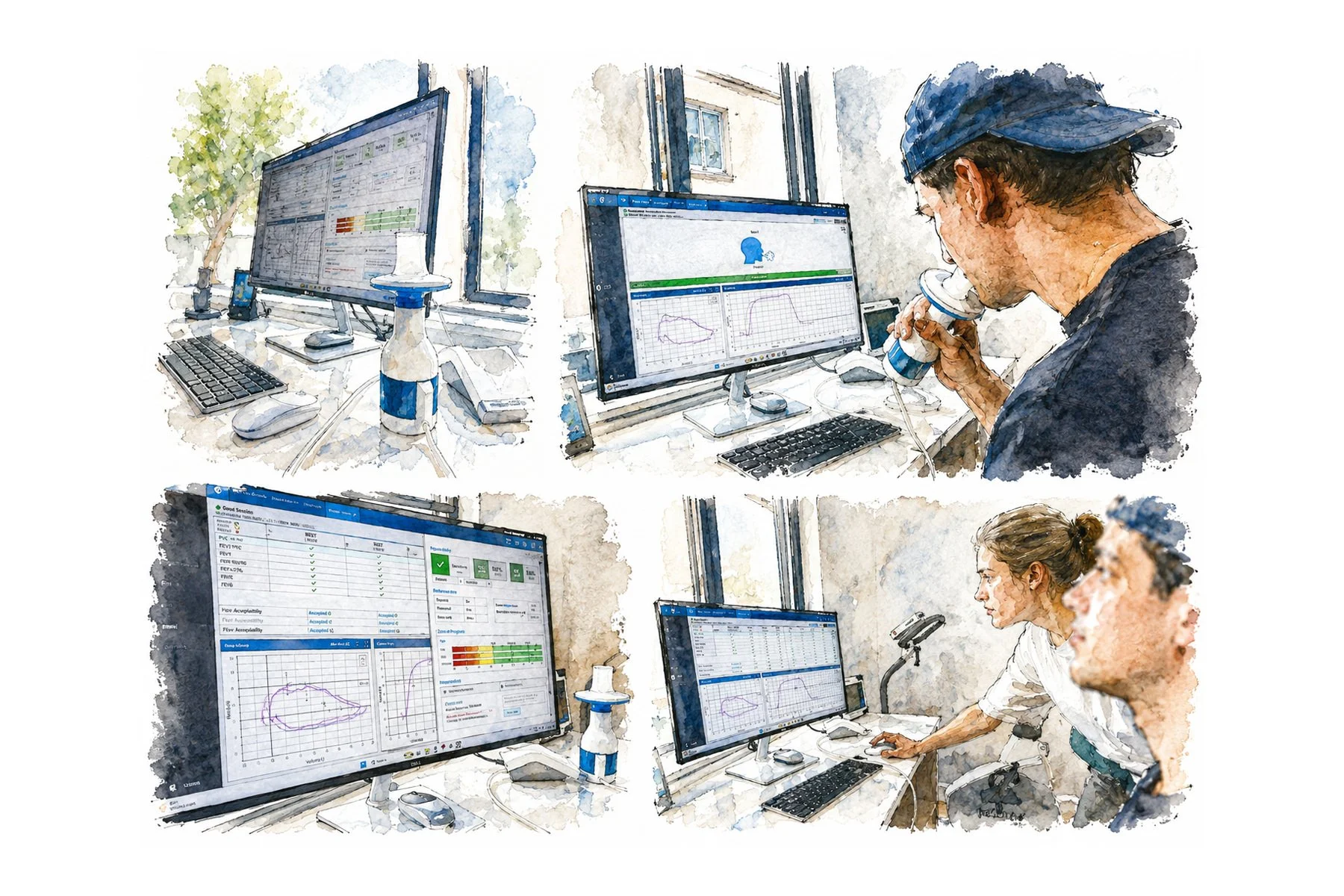
At Peak Family Practice, we use the Vitalograph Pneumotrac spirometer, a trusted medical-grade device used internationally for spirometry (lung function testing). In simple terms, it allows us to measure how much air you can breathe out, and how quickly you can do it, which gives important insight into how well your lungs are working.
What we like about this system is that it helps us get results that are not only accurate, but also consistent and clinically meaningful.
A few reasons this matters:
✔ Clear, reliable measurements
Breathing tests can be affected by technique, effort, and timing, especially when someone is short of breath or coughing. Our spirometry setup is designed to capture airflow accurately, which helps us make sense of the result with more confidence.
✔ Real-time guidance during the test
Spirometry isn’t just “blow once and you’re done”. To get a reliable reading, the test usually needs to be repeated a few times. Our system gives real-time feedback during the test so we can coach you through it and ensure the measurements are as accurate as possible.
✔ Helps us assess common conditions like asthma and COPD
Spirometry is one of the most useful tools we have for investigating symptoms such as:
wheezing
chronic cough
chest tightness
shortness of breath
reduced exercise tolerance
It can help us assess whether airflow limitation is present, and whether further treatment or investigation is needed.
✔ Useful for monitoring progress over time
For patients with known respiratory conditions, spirometry helps us track changes over time; whether that’s improvement with treatment, or early detection of worsening control.
✔ A professional, hygienic testing process
We use appropriate single-use filters and mouthpieces as part of our infection control process, so testing is safe and comfortable.
What are the benefits of spirometry?
Lung function testing can be valuable because it helps us:
move from symptoms to objective measurements
detect breathing issues early
confirm or exclude common conditions like asthma
guide appropriate treatment choices
monitor improvement over time
provide reassurance when results are normal
It’s a simple test but it can offer a lot of clarity.
The bottom line
If you’re experiencing persistent or recurrent cough, wheezing, breathlessness, or a noticeable change in your exercise tolerance, a lung function test can be a helpful next step.
At Peak Family Practice in Hout Bay, Cape Town, we combine accurate spirometry testing with a calm, thorough clinical approach so you leave with clearer answers and a plan you feel confident about.
If you’d like to book a lung function test, or you’re unsure whether it’s the right investigation for your symptoms, we’re happy to guide you.