Stress ECG (Exercise ECG):
What It Is, Who Needs It, and What It Can Detect
Most people don’t think about their heart very often, until something feels “off”.
It might be:
Chest tightness, pressure or discomfort on exertion.
Shortness of breath that seems out of proportion.
Palpitations during exercise.
Sudden dip in your usual energy or fitness.
When symptoms are intermittent or unpredictable, it can be difficult to know what’s going on and that uncertainty can feel unsettling.
A stress ECG (exercise ECG) is one of the most useful ways to assess how your heart behaves when it’s working harder.
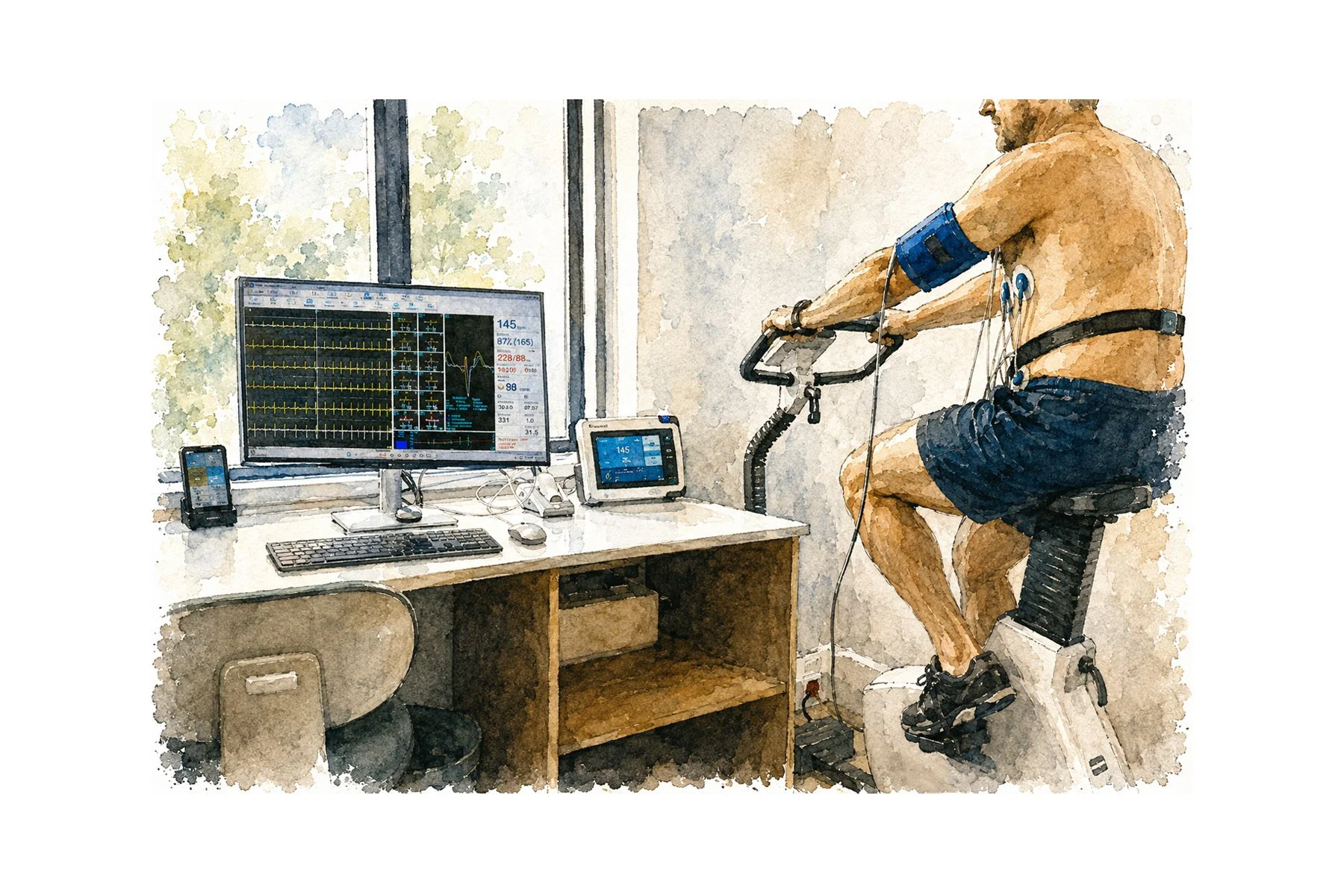
At Peak Family Practice, we offer stress ECG testing using advanced medical-grade Norav equipment, including a specialised ECG bicycle ergometer. We’re proud to offer a level of testing that is still relatively uncommon in GP practices in South Africa and it allows us to assess your heart in a controlled, accurate, and patient-friendly way.
What is a stress ECG?
A stress ECG is a test that records your heart’s electrical activity while you exercise.
The goal is to observe what happens when your heart rate rises and the heart muscle needs more oxygen.
Some heart problems don’t show up when you’re sitting still, but become noticeable when your heart is under physical demand.
A stress ECG helps us look for:
Changes in heart rhythm.
Signs that the heart muscle may not be getting enough blood flow under exertion.
Abnormal blood pressure responses to exercise.
Exercise tolerance (how your heart and body cope with increasing workload).
Why a stress ECG can be more revealing than a resting ECG
A resting ECG is a valuable baseline test, but it only shows what your heart is doing in that moment.
A stress ECG asks a different question:
“How does your heart cope when it’s asked to do more?”
This is especially important for people with multiple cardiac risk factors or whose symptoms occur during:
Walking uphill
Running
Cycling
Hiking
Busy days with physical effort
Periods of stress and exertion
Who should consider a stress ECG?
A stress ECG may be recommended if you have:
1. Chest pain or discomfort
Not all chest pain is heart-related but chest discomfort that happens during activity should always be assessed carefully.
A stress ECG can help determine whether symptoms may be related to reduced blood flow to the heart muscle, such as angina.
2. Shortness of breath that feels unusual
Breathlessness can have many causes, including:
Fitness level
Asthma or lung conditions
Anaemia
Anxiety
Heart strain
A stress ECG helps us assess whether your heart may be contributing.
3. Palpitations during exercise
Many palpitations are benign, but some rhythms become more obvious during exertion. Stress testing can help capture exercise-related rhythm changes in a safe environment.
4. Reduced exercise tolerance or unexplained fatigue
If you feel like you “just can’t do what you used to”, it may be worth investigating whether there is a cardiovascular reason, particularly if this change is new or progressive.
5. Heart risk factors
You may benefit from stress testing if you have risk factors such as:
High blood pressure
High cholesterol
Diabetes or insulin resistance
Smoking history
Strong family history of heart disease
Sometimes symptoms are subtle and testing can help guide prevention.
What can a stress ECG detect?
A stress ECG is commonly used to help assess for:
✔️ Reduced blood flow under exertion
This may suggest underlying coronary artery disease.
✔️ Abnormal heart rhythms triggered by exercise
Some arrhythmias are only present during exertion or recovery.
✔️ Blood pressure response to exercise
Blood pressure can behave abnormally under stress and this can provide valuable information about cardiovascular risk and fitness safety.
✔️ Exercise capacity and recovery
How quickly your heart rate recovers after exercise can be a helpful indicator of cardiovascular conditioning and autonomic function.
What happens during a stress ECG at Peak Family Practice?
Your test is done in a calm, supervised clinical setting.
In general, the process includes:
Baseline assessment
We review your symptoms and history
Check resting blood pressure
Record a baseline ECG
Exercise phase
You cycle on a medical-grade ergometer
Resistance increases gradually in a controlled way
Your ECG is continuously monitored
Blood pressure monitoring
Blood pressure is measured at intervals during exercise and recovery
This is important for safety and interpretation
Recovery monitoring
We continue ECG and blood pressure monitoring as your heart rate returns to baseline
You can stop the test at any time if you feel unwell, overly fatigued, or develop symptoms.
Why our stress ECG setup matters
Stress testing is only as useful as the quality of monitoring behind it.
At Peak Family Practice, our system is designed to support:
Accurate ECG signal capture during movement
Computer-controlled workload progression
Reliable blood pressure monitoring during exertion
We also use a bicycle-based system, which many patients find more comfortable and approachable than treadmill testing, especially those with joint discomfort, balance concerns, or anxiety around running.
We believe that investing in advanced diagnostics is part of providing the highest level of preventive care: not just treating symptoms, but understanding them properly.
What a stress ECG can’t do (and what happens next)
Stress ECGs are an excellent test but they’re not the final answer for every patient.
Sometimes a stress ECG is reassuring and no further testing is needed.
Sometimes it helps us decide whether additional investigations are appropriate, such as:
Echocardiography (heart ultrasound)
Blood tests
Lung function testing
Referral to a cardiologist for advanced imaging if indicated
The bottom line
A stress ECG is a valuable test when:
Symptoms happen during activity
Cardiac risk factors are present
You want a clear, medically supervised assessment of how your heart performs under load
At Peak Family Practice, we offer stress ECG testing with advanced equipment and a careful, patient-centred approach, so you can feel informed, supported, and confident in the plan going forward.
If you’re unsure whether stress testing is right for you, you’re welcome to book a consultation and we can guide you based on your individual symptoms and risk profile.
Learn more about the differences between Resting & Stress ECG’s here:
Frequently asked questions about our ECG testing: