Resting ECG vs Stress ECG:
Which Heart Test Do You Need?
When it comes to heart health, one of the most common questions we hear is:
“Do I need an ECG… and if so, which type?”
ECGs are one of the simplest and most valuable tools we have to assess how your heart is functioning. But not all ECGs are the same and the right test depends on your symptoms, your risk factors, and what your doctor is looking for.
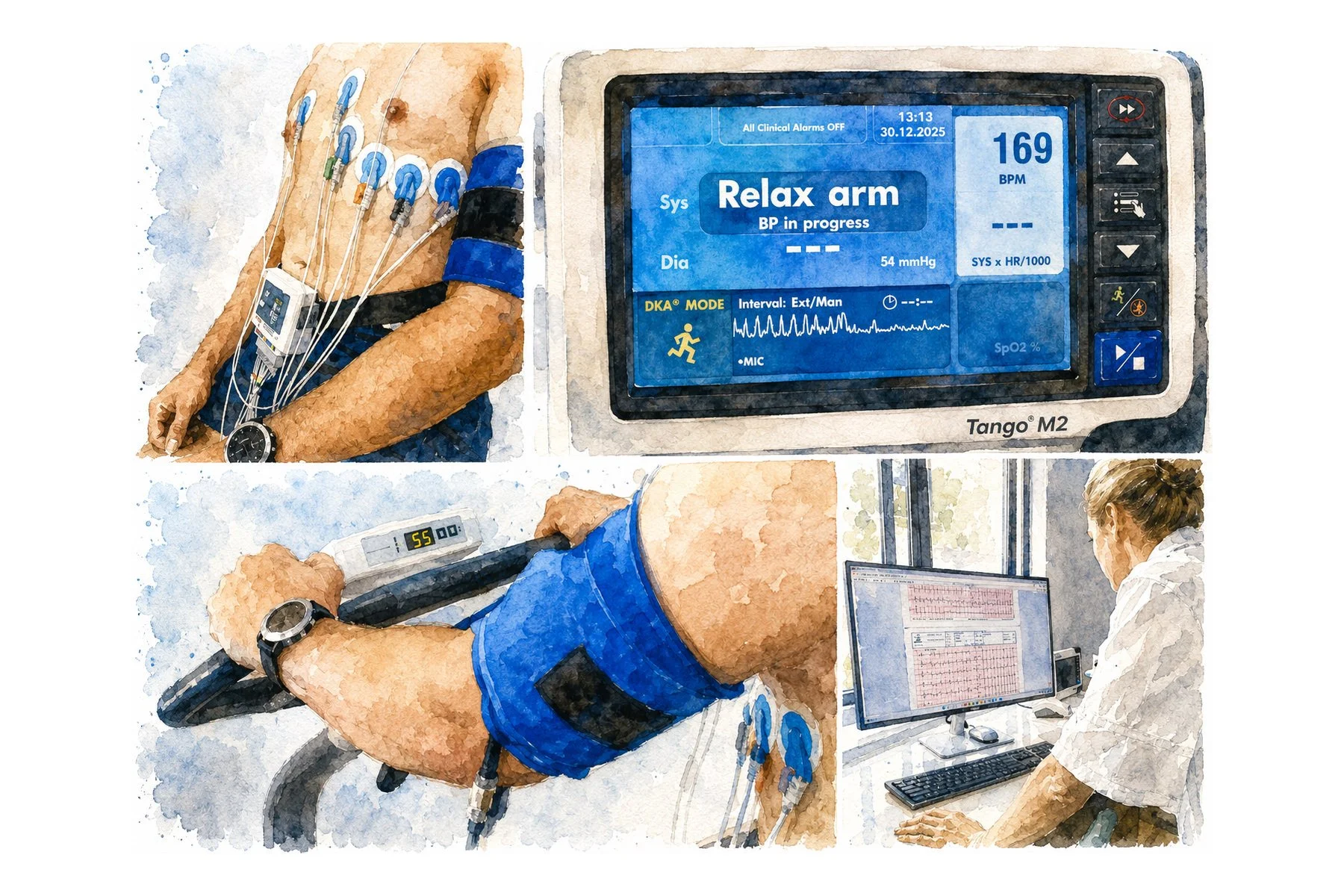
At Peak Family Practice, we offer both resting ECGs and stress ECGs (exercise ECGs) using advanced medical-grade equipment including a specialised bicycle ergometer, which is still uncommon in general practice settings in South Africa.
Here’s a clear guide to help you understand the difference.
What is an ECG?
An ECG (electrocardiogram) is a test that records the electrical activity of your heart.
Each heartbeat is triggered by an electrical signal. An ECG allows us to see:
How fast your heart is beating.
Whether the rhythm is regular.
Whether there are signs of strain, thickening, or previous injury.
Whether there are clues that the heart muscle may not be getting enough oxygen.
It’s quick, non-invasive, and painless and it gives valuable information within minutes.
What is a resting ECG?
A resting ECG is done while you are lying down and relaxed.
Small stickers (electrodes) are placed on the chest, arms, and legs, and the ECG machine records your heart’s electrical signals over a short period of time.
You will be asked to lie still and breathe quietly while we record the ECG.
The ECG test itself is completely painless, although you may feel minor discomfort when the stickers are removed afterwards.
A resting ECG is useful for:
Palpitations or irregular heartbeat
Dizziness or fainting
A baseline heart check if you have high blood pressure, diabetes, or high cholesterol
Checking for rhythm conditions such as atrial fibrillation
Looking for evidence of a previous heart event
Monitoring certain medications that may affect heart rhythm
A resting ECG is ideal when:
Your symptoms occur at rest, or you need a baseline assessment as part of a broader health check.
What a resting ECG can miss
A resting ECG gives us a snapshot of what the heart is doing in that moment.
But some heart problems only show up when the heart is under load, especially when you’re exercising, walking uphill, rushing through the airport, or chasing kids around the house.
That’s where a stress ECG becomes useful.
What is a stress ECG (exercise ECG)?
A stress ECG measures your heart while it works harder.
It involves monitoring your ECG while you exercise in a controlled, medically supervised setting, with your heart rate gradually increasing.
At Peak, stress testing is done using a medical-grade ECG bicycle ergometer, rather than a treadmill.
This allows us to assess:
How your heart rhythm behaves under exertion.
Whether the heart muscle is receiving enough blood flow during exercise.
How your blood pressure responds to activity.
Whether symptoms can be reproduced in a safe environment.
Why we use an ECG bicycle (instead of a treadmill)
Many people assume stress tests are always done on a treadmill, but a bicycle ergometer has several advantages.
Our stress ECG bike is designed for precise, computer-controlled workload increases, allowing a smooth and accurate test progression.
Benefits of bike-based stress ECG testing include:
Lower impact on joints (often more comfortable for older patients or those with knee/hip pain)
More stable and secure than walking or running on a treadmill
Less intimidating for people who feel unsteady or anxious about treadmill testing
A great fit for Cape Town’s cycling community, where many patients are more comfortable on a bike than a treadmill
Reliable monitoring, because the upper body can remain more stable while we track ECG and blood pressure
In other words: it’s a modern, patient-friendly way to do a stress test with diagnostic accuracy.
Who needs a stress ECG rather than a resting ECG?
You may benefit from a stress ECG if:
You have multiple heart risk factors.
You have chest discomfort during exertion.
You get short of breath more easily than expected.
You experience unexplained fatigue or reduced exercise tolerance.
You have symptoms that are unpredictable but seem linked to activity.
Stress ECGs are particularly useful when symptoms happen during activity but the resting ECG is normal.
So which one do you need?
A helpful way to think about it is:
Resting ECG = “What is my heart doing right now, at rest?”
Stress ECG = “How does my heart cope when it needs to work harder?”
If you’re unsure which is right for you, we’re happy to guide you based on your symptoms, medical history, and overall risk profile.
A calm, thorough approach to heart testing
At Peak Family Practice, we combine:
Advanced diagnostic equipment.
Careful clinical assessment.
A calm, supportive environment.
Our goal is to investigate thoughtfully, explain clearly, and help you feel confident in your next steps.
If you’re experiencing symptoms or want to understand your heart health more clearly, you’re welcome to book a consultation and we can advise whether a resting ECG or stress ECG is appropriate.
Learn more about Stress ECG’s:
Frequently asked questions about our ECG testing: