Why Annual Mole Checks Matter:
The Importance of Early Skin Cancer Detection
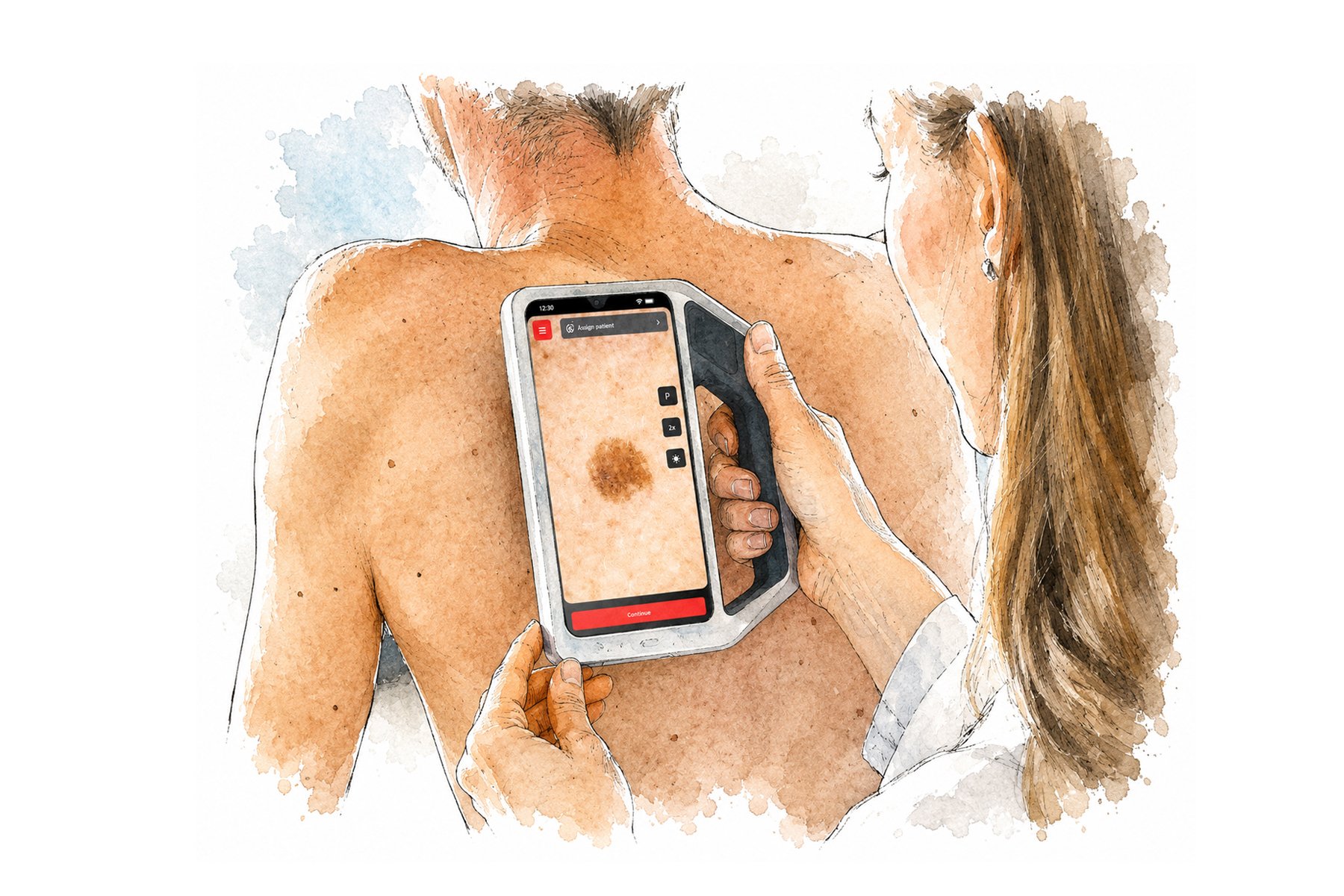
Most of us are familiar with the occasional freckle or mole that has been with us for years. In fact, the average adult has between 10 and 40 moles scattered across their body. While the vast majority are completely harmless, some can change over time and, in rare cases, develop into skin cancer.
The good news is that skin cancer, particularly melanoma, is highly treatable when detected early. This is why regular skin examinations and mole mapping have become such valuable tools in modern preventative healthcare.
Why Should I Have My Moles Checked?
One of the biggest challenges with skin cancer is that it often develops silently. Early melanoma is usually painless and may not cause any symptoms at all. Many people only seek medical attention once they notice a dramatic change, but by that stage the lesion may have been evolving for months or even years.
A yearly skin assessment allows us to identify suspicious lesions at their earliest stages, often before they become visible concerns to the patient.
Not All Skin Cancers Look Alarming
Many people assume that skin cancer must appear as a large, black mole. In reality, skin cancers can take many different forms.
Some melanomas may be pink, red, skin-coloured, or only slightly darker than the surrounding skin. Other forms of skin cancer may appear as a sore that refuses to heal, a scaly patch, or a small pearly bump.
This is one of the reasons why professional skin examinations are so important. What may look insignificant to an untrained eye can sometimes warrant closer investigation.
The Importance of Change
When it comes to skin lesions, change is often the most important warning sign.
We often teach patients the ABCDE rule:
A – Asymmetry
B – Border irregularity
C – Colour variation
D – Diameter greater than 6 mm
E – Evolution or change over time
Of these, "E" for evolution is arguably the most important. A mole that is changing in size, shape, colour, or behaviour deserves assessment.
Another useful concept is the "Ugly Duckling" sign. Most of your moles tend to resemble one another. If one mole looks noticeably different from the rest, it may require further evaluation.
What Is Mole Mapping?
At Peak Family Practice, we are excited to offer mole mapping using our FotoFinder dermatoscopy system.
Mole mapping combines high-quality photography with specialised dermatoscopic imaging to create a detailed record of your skin and moles. Rather than relying on memory or a single examination, we can compare images over time and identify subtle changes that may otherwise go unnoticed.
This technology allows us to:
Monitor moles accurately over time
Detect early changes
Identify suspicious lesions sooner
Reduce unnecessary biopsies of stable lesions
Provide greater reassurance when moles remain unchanged
Often, the value lies not in what a mole looks like today, but in whether it looks different from six months or a year ago.
Who Should Consider Annual Screening?
While anyone can benefit from a skin examination, annual screening is particularly important if you:
Have fair skin
Have a large number of moles
Have atypical or unusual-looking moles
Have a personal or family history of skin cancer
Have experienced severe sunburns, especially during childhood
Spend significant time outdoors
Have a weakened immune system
Living in South Africa means most of us receive significant sun exposure throughout our lives. The effects of ultraviolet (UV) radiation accumulate over time, making regular skin surveillance increasingly important as we age.
A Simple Step That Could Save Your Life
Most skin examinations are quick, painless, and non-invasive. A yearly appointment can provide peace of mind while also allowing for early detection of potentially serious skin conditions.
Your skin is your body's largest organ and one of the few that can be examined directly. Paying attention to changes and having regular professional assessments is one of the simplest yet most effective ways to protect your long-term health.
If you have concerns about a mole, have noticed a new or changing skin lesion, or would like a baseline skin assessment, contact Peak Family Practice to book a skin check. Our FotoFinder Skeen dermatoscope allows us to closely examine and photograph moles, making it easier to monitor changes over time and identify lesions that may require further assessment, excision, or referral to a dermatologist.